I had those moments, and it even affected my work too; and after years of trying out so many techniques, I finally found my go-to solutions for this dilemma, which I am now sharing with you. Let’s start learning how to navigate workplace challenges in the most effective way.
Opening yourself to others about what you feel is still the best solution.
Sure, it is so cliché, but opening yourself up to others about how you feel works wonders even to this day.
Just a simple, “Hey, do you have time to talk?” goes a long way than suffering in silence and blaming yourself. Trust me– there are moments when we randomly feel alone, even though we aren’t—we got the best circle of friends, family, and even our special someone’s—yet you just feel alone.
Well, truth be told, it’s not the case.
It’s just your brain telling you that you are, like a self-fulfilling prophecy. It is more than proven that when we share what we feel with others, the things that we feel burdening us gets lighter; this is foolproof.
Not to mention, an article from National Institute of Medicine mentions the positive correlation that sharing emotions with others does for ourselves and the other party.
During those times when I am not feeling myself, I tap a friend, a family member, or even my special someone, be vulnerable and just let it all flow; and you know what, after some time, I start feeling good.
I know it might feel awkward at first, but the more you do it – the easier it gets. You don’t have to hold everything inside all the time.
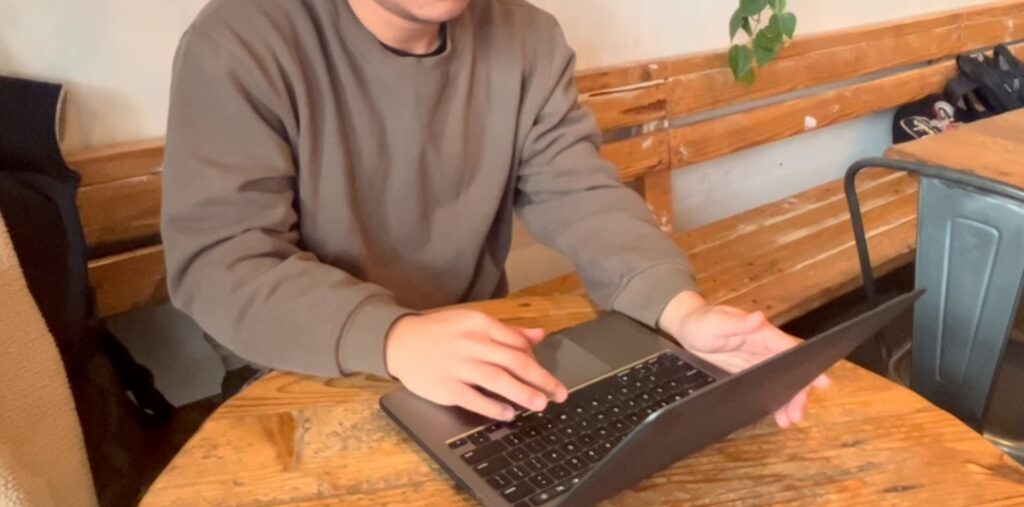
Don’t force yourself to focus when you really just can’t.
Photo by: Angela Nguyen
Imagine convincing yourself that you can do a certain thing, but you just lack the willpower to do so. It’s stressful and eventually can give you burnouts.
Who says you need to sit for hours on end in front of something that you should be doing, without the proper mindset, and come out successful. That’s hard, and while some win in this aspect, it’s not a cup of tea for everyone. Every single one of us has their own processes of doing this—something may work for you but won’t with others—it’s just how life goes.
But during these times, I try to do minimal focus—I rest from time-to-time making sure that I am still making progress, though small ones, as long as I don’t put strain on myself too much. This is the time that I discovered something that changed how I do things in life.
Are you familiar with Pomodoro? And no, it’s not a tomato (in Italian language).
It’s this time management tool that you can use where you break down your focus times in specific blocks separated by breaks in between. For example, you’ll focus for 25 minutes and then take a five-minute break.
Personally, I do 50-minute focus and a 10-minute break—and I know this time block is feel hard but it works for me. I wouldn’t recommend this if you think this is still pretty overwhelming, the 25-5 Pomodoro might just easily be the trick to destressing your working environment.
Now that we are mentioning blocking out times to focus at work, we also need to highlight the importance of taking breaks.
Apart from opening yourself to others, another fail-safe solution is to just take a break. It’s not also about traveling somewhere or planning a getaway to escape your daily woes—it’s just pausing for a moment.
Simply taking a mental health break for a day makes a whole new difference; trust me, I know. I have been doing this for some time now and it really makes it better when I get back to continue where I left off. Taking a break is simply the most powerful thing you can do to refuel your energy and reset your mind.
A day off could also be the perfect antidote, specifically if you have pushed through with your tasks for an entire week or if you have been stressed with just about anything.
According to an article from the National Institute of Medicine, breaks help to reboot your brain and health. It helps repair your cognitive abilities and prevents overwork – especially if your job requires you to be stationed for long durations of time or involves hours of screen-time.
You could do this by simply stepping away from digital stuff and just focus on yourself. Rekindling former hobbies, like reading, that once brought you joy is also a sure way to take a break. But this definitely varies for everyone—one may find peace with watching movies at your local cinema, cooking a recipe you found online, enjoying a hot bath (complete with scented candles around), or just sleeping.
Whatever it is that you think will rejuvenate yourself, go for it—this should also not be limited to just one—combine them if you want.
I’ve learned this the hard way that a stressed mind will always spiral itself way out of its place. That’s why taking breaks from time-to-time makes it better for you.
Always remember that a rested mind is critical to achieving a productive and creative workday, whatever industry you are in.
Now let’s bring attention to how you navigate yourself to take a break from your comfort zone and how and why you should dive into finding comfort and curiosity in things that you may not be used to. Continue reading to learn how to navigate workplace challenges in the most effective way.
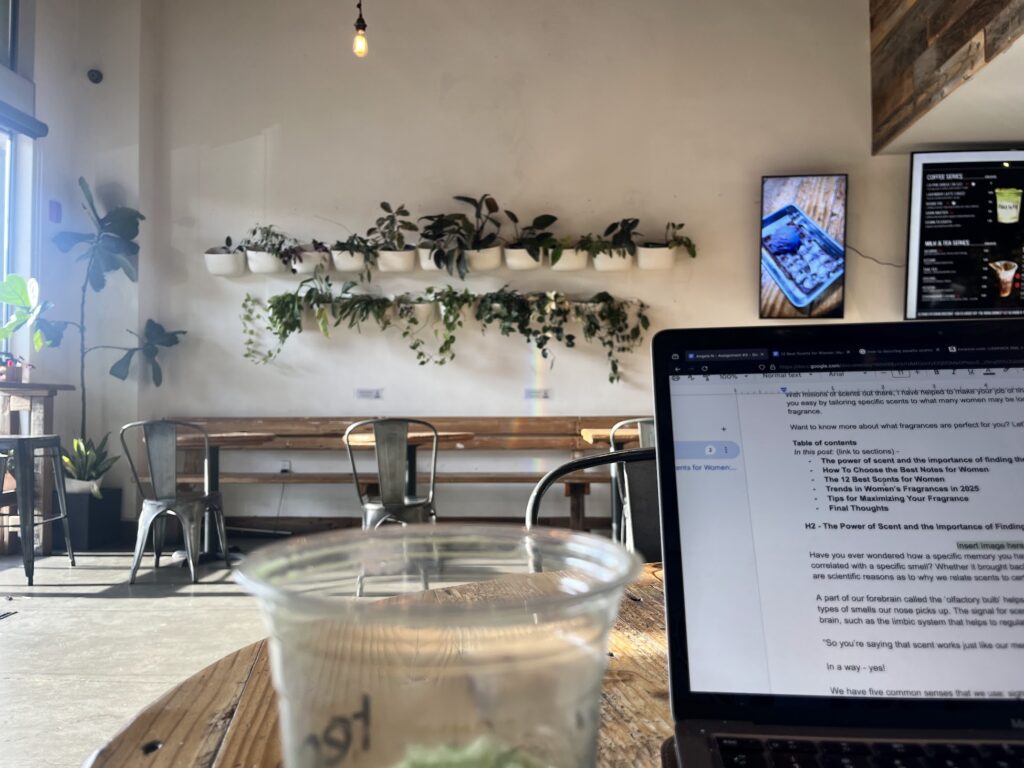
Learn more and go out of your comfort zone.
Phot by: Angela Nguyen
This next one may actually require you to put work to navigate workplace challenges, but learning more actually reduces work stress. Okay, bear with me, if at first that didn’t make sense.
From an article by Harvard Summer School, getting comfortable by getting uncomfortable helps you build more openness and trust in others. For me, my start of doing this at work helped me to ease into relying on others for answers to questions I had. It also helped me realize that not everything had to be on my shoulders at once.
What you may be feeling though, is that there may be times when you feel like your job is second nature to you, yet if you improve on your skills further, you’ll observe how you feel at home (and more) with your tasks. The complexity of the tasks you are handling prior to learning more about your work will be as easy as A-B-C for you.
But don’t just go all out and then begin stressing yourself, you can always start small. You don’t need to improve on yourself overnight and seek instant success—it’s all about the process—and believe me in a few months, you’ll see how far you went from that small step in the beginning.
If there is a webinar or workshop that you have been interested in for a long time now, maybe it’s time to attend.
Haven’t gotten a hang on how pivot tables work in sheets? Then, maybe try to look for tutorials and start learning it. Do you want to level up a specific skill set? Well, sign up for a course online (there are tons of them in the digital space). See what I mean?
All of these improvements that you can make on your life lies on you—all you need to do is finally seize them.
It’s okay to feel that one day, you are getting out of your comfort zone better than other days. We all sometimes have to take one step back to take two steps forward.
One of the other steps that helps me relax at work is simple but transformative: reorganizing my workstation. Let me explain in this next section why it will help you with learning how to navigate workplace challenges in the most effective way.
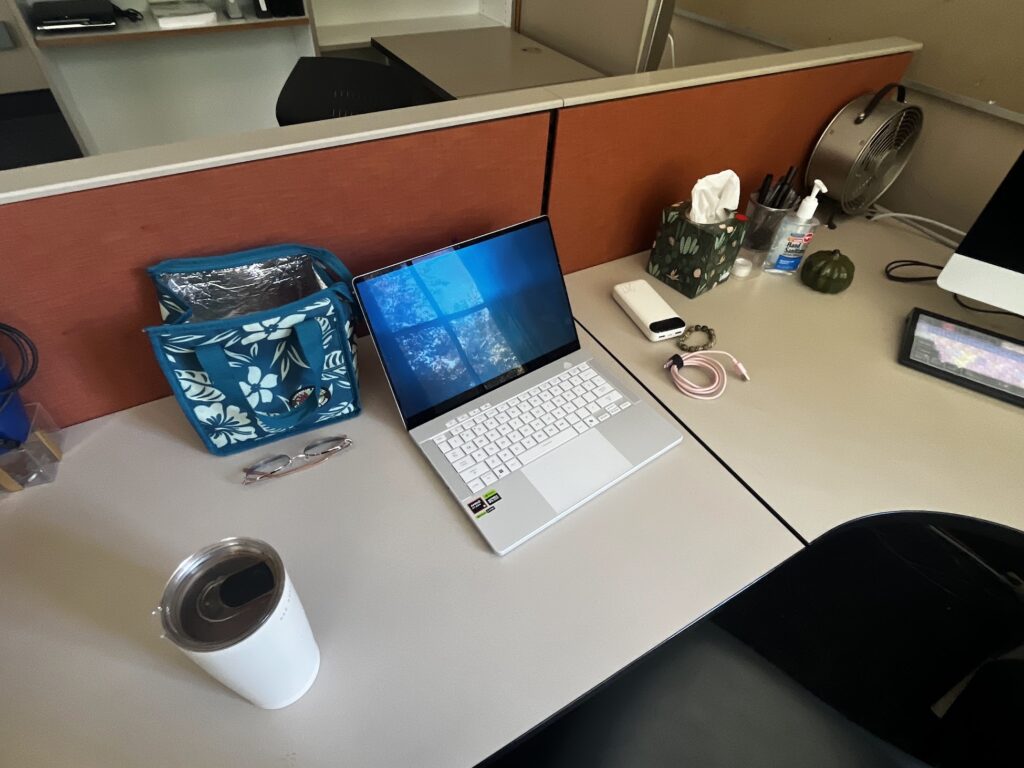
Reorganize your workstation—a little tidying up or designing here and there is a good start.
Photo by: Angela Nguyen
Do you know that tidying up or reorganizing your work environment is key to a better mindset, and eventually an improved work environment.
From a Harvard Business Review article, cleaning your desk does more than make it look clean and pretty. It’s a physical representation of your mind – just like how the interior of your room may look like.
You’ll notice that even decluttering your workstation makes a big difference—a small plant, photos, or even a stack of colorful notepads will do. A clean and organized space has always been something that directly relates to how clear our minds can also be, well more than you might think.
Since you are on your workstation for hours and hours on end, why not make it into something that inspires you and pushes you to do better.
This is why my workstation is filled with photos and small plants as it definitely clears my mind whenever I pause—looking at them does wonders on my mental health for sure. Plus, a cute pumpkin to fit with the seasonal decorations doesn’t hurt anybody.
These are just some of the ways that I do to battle out workplace stress, and there can be many more. Try it out and see how it can definitely change something, may it be little or big, eventually affecting the entirety of your mental health—all for the better.
Now that we are getting to the end of my tips and tricks on how to navigate workplace challenges in the most effective way, let’s do a quick recap on everything we’ve learned this far. Buckle up!
Some Food for Thought
Photo by: Angela Nguyen
When it comes to learning how to work through a job without losing yourself, it can be hard. I know a lot of us have a lot on our plate outside of work too, but when I started implementing some of these tactics into my work schedule – it was life-changing.
Taking some time to open yourself up to your workers outside of saying the general ‘hi’ and ‘hello’s’ may seem foreign. The mentality of clocking in and out of work is more common than you think for most people. But in every profession, we need people who we can relate to outside of just our friends and families.
And for those who believe you are a workaholic like myself, one of the most challenging things to overcome was taking a break to not overwork myself. Thinking of small activities to do during my breaks helps me feel more open to taking them, such as reading or drawing.
If you feel like mixing the first two tips, my best advice is to take a stroll on your break and walk up to people who don’t seem busy to and just start a conversation. Building those friendships goes a long way – trust me.
Once you’ve built a friendship with one or two people, it’s a great time to learn to get out of your comfort and be curious about others parts of your job. Learning about other people’s positions in my job helped me become more aware of how the company works which is a great place to start if getting out of your comfort zone seems too daunting.
Now the last tip being cleaning up your desk might seem trivial, but small efforts add up to something big. Like I said, decluttering your house is one thing but also maintaining a clean workspace does wonders.
It took me a long time to find comfort in my job and it’s still something I try everyday to do. Somedays, I feel better while working while other days I feel better after clocking out of my shift.
Just know that everyday is a different opportunity for you to learn something new which can help take the tension off of your shoulders.
If you’ve come this far in my article about how to navigate workplace challenges in the most effective ways, I’m glad yous stayed. I hope these tips brings you some encouragement to break your own boundaries.
If you’ve enjoyed this article, feel free to comment down below which tip you would like to try first, which ones worked the best for you, and even recommend it to a friend.
Midlaine Richard-Pean is a double-board Certified Family Nurse Practitioner and Psychiatric Mental Health Nurse Practitioner, dedicated to a holistic approach to patient care. With a deep passion for healing, she finds no greater fulfillment than empowering individuals on their journey to well-being. Half of her nursing career has been devoted to psychiatric health, reflecting her unwavering commitment to helping those with mental illnesses. Through compassionate care and advocacy, Midlaine Richard-Pean strives to make a meaningful difference in the lives of those who seek her help.






Leave a Reply