Anxiety. It sucks because it is always there. It plays in the back of the mind like a dull ache, a constant source of stress that ruins days before they begin. Anxiety is hard to describe because it’s different for everyone.
For some people, it is more physical, manifesting in symptoms such as increased heart rate, tingling hands and feet, nausea, and dry mouth. Other people may feel more latent symptoms, like having trouble sleeping and concentrating.
While some fear every now and then is normal, persistent anxiety can make it difficult to function in everyday life. I know how overwhelming it can be to go through the day when anxiety levels are high. It makes every little task seem impossible.
I remember when how I felt when my anxiety was at an all time high. It felt shameful and embarrassing. I would constantly ask myself: Why am I feeling this way at this grown age? Am I feeling sensitive?
Over time and after seeking guidance from a professional, I realized that how I felt was something that can be eased out. At first, it wasn’t easy. Progress is never easy.
However, practicing talking about it with a therapist helped tremendously. I was able to discover 15 engaging hobbies to help with anxiety.
Consulting with a therapist can help manage anxiety, and it is recommended that you consult with a mental health professional if anxiety is getting in the way of your daily life.
Fortunately, there are many different ways to help manage anxiety. Exercising, managing your sleep schedule, and diet can play a big part in alleviating symptoms. Hobbies can provide a healthy outlet for stress and anxiety, helping put your mind at ease.
I am partial to hobbies because of how tailored they can be. Hobbies can be anything, and they can transform a person. These engaging and accessible hobbies can help you find what is effective in managing your anxiety.
The Connection Between Hobbies and Anxiety Relief
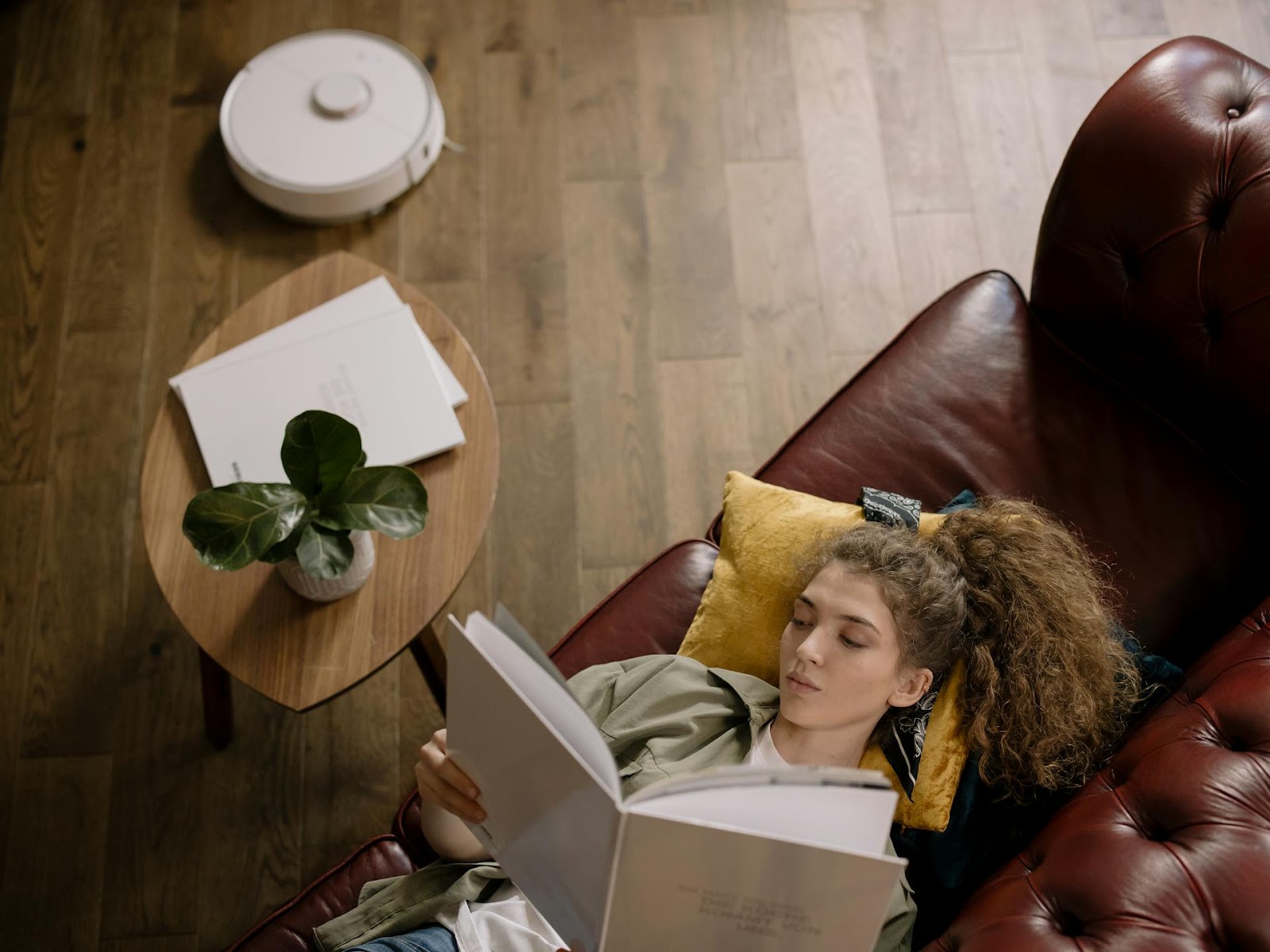
Hobbies help because they distract. They can help push away the anxious thoughts, giving the brain something else to think about.
I get excited about my hobbies and look forward to the time I set apart to engage in them. This helps me focus on the present and stay in the moment rather than looking at all of the other things happening in my life. My hobbies also give me a sense of accomplishment.
My hobbies are just for me, and they make me feel in control. A lot of anxiety stems from not feeling like you can’t control anything, and activities help me remember that I am capable of accomplishment an assortment of tasks.
Studies have found that leisure activities help mental well-being, including lowering stress and depression levels. Hobbies are sometimes written off as a “waste of time”.
However, hobbies can help improve mental health. I know that there is a lot of pressure in the world to stay productive and not fall behind. However, hobbies help you expand your whole self, helping you grow.
Now let’s jump right into figuring out how to select the best hobby for you!
Choosing the Right Hobby for You
Remember that hobbies are meant to be fun. They aren’t supposed to be another source of stress, but something to help you relax. Find something that aligns with your interests, lifestyle and personality.
Think about the things you’ve always been drawn to or maybe turn to your Social Media feed for inspiration. You can learn a new skill or rekindle something you loved in your childhood.
Don’t just do what all your friends or family are doing, or whatever is trending at the moment. Try a lot of different things and discover the hobby that suits you the best.
Here are my top 15 engaging hobbies to help with anxiety!
15 Engaging Hobbies to Help with Anxiety
1. Gardening
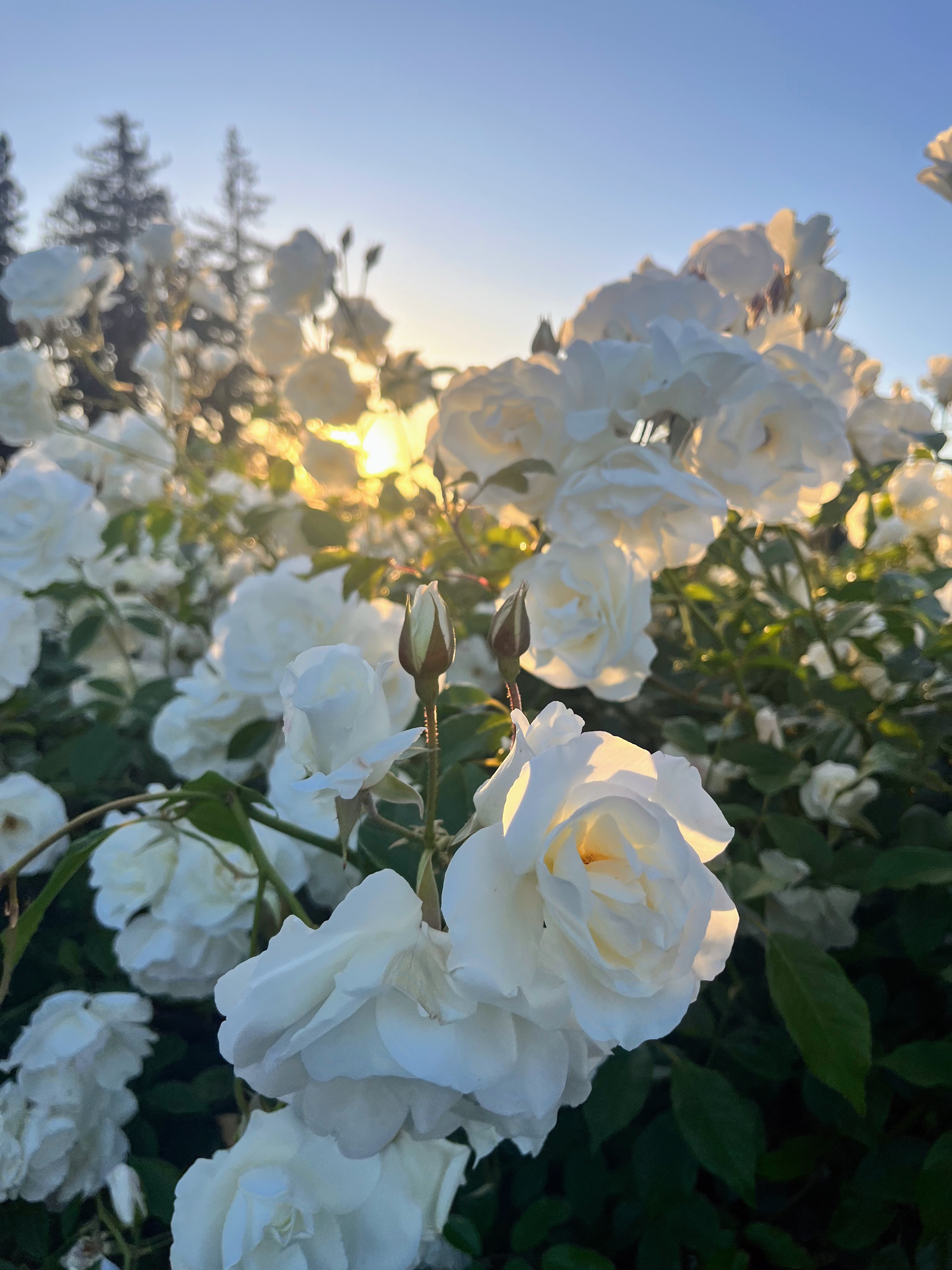
Fun fact: A study from National Library of Medicine shows that people who began gardening often and those who stuck with it for years showed lower levels of anxiety and stress compared to that of a participant who didn’t garden.
For myself, gardening takes time and effort and love, which is why I love my plant babies and highly recommend everyone to begin nurturing a plant. Gardening is a hobby that soothes your mind and connects you with nature, even in a small place. It is easy to get lost in learning about how to take care of different plants, how to nurture them to see them grow.
I started my garden in my tiny dorm room, starting with a collection of succulents. Succulents were a great way to start because they are easy to take care of. I got my second plant at a giveaway, and this is what really got me into gardening. It was a singular potted gardenia, but I loved watching it bloom every year.
I add more flowers to my balcony every spring, watching new flowers bloom. Gardening requires you to plan and tend to it every day. If you have trouble setting time aside for self-care, gardening may be a good hobby for you. Even when things seem to be whirling, going to your garden and putting time to take care of something can help ease your mind.
It’s rewarding to see what blooms from your own efforts.
However, if gardening is not speaking to you, there might be other options available within this list of hobbies to help with anxiety – like art!
2. Painting or Drawing
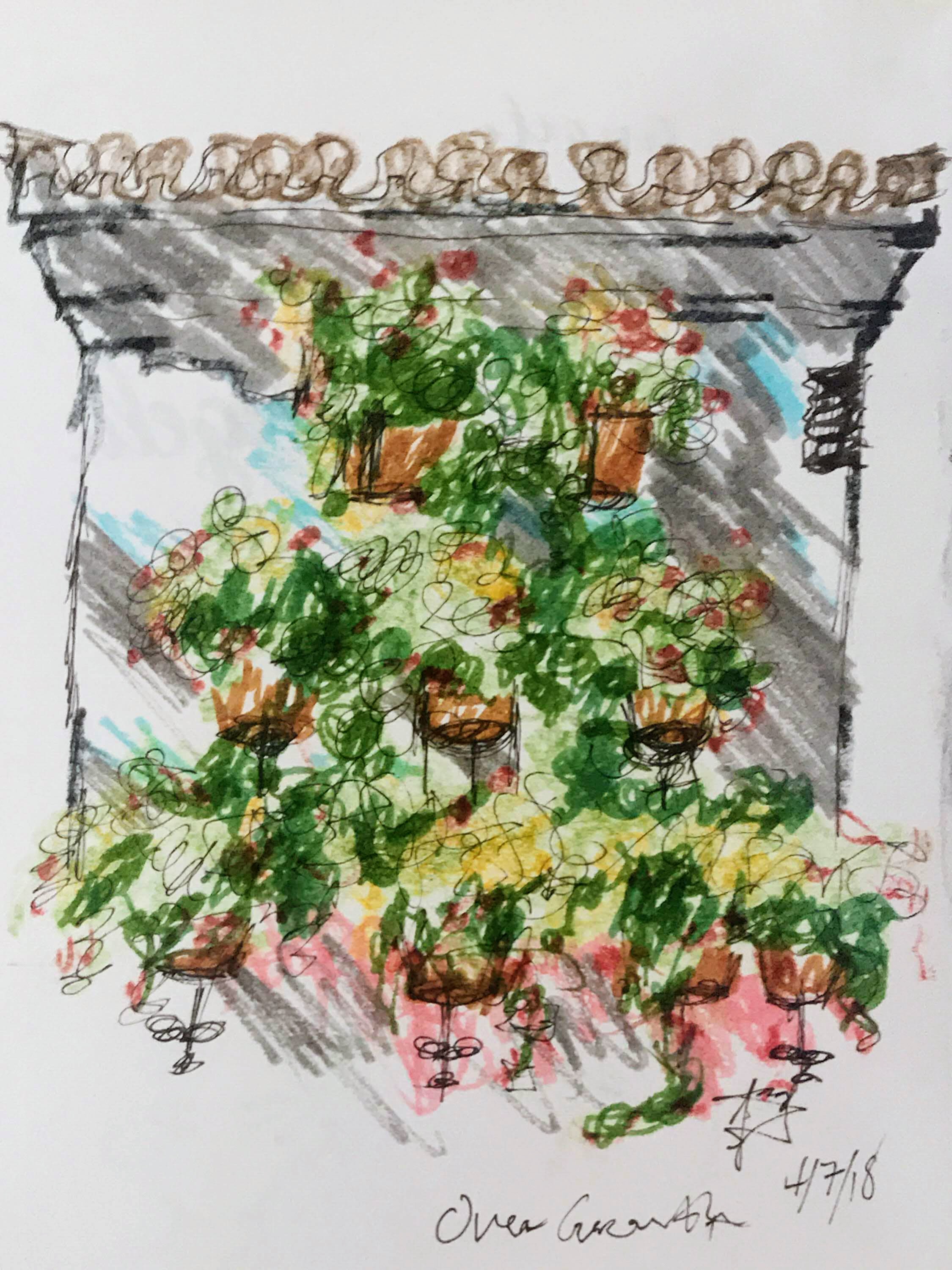
Fun fact: According to a study conducted by the National Library of Medicine, people who take up art twice a week show higher levels of anxiety reduction than those who commit to it once or less on a weekly basis.
Anxiety is a feeling of losing control. It makes it seem like the world is passing you by. Painting and drawing help you create.
You are in charge of the canvas. You control how the picture comes out. You don’t have to be an expert artist to pick up this hobby.
One of the most creative ways to combat with anxiety has to be this tip out of all of my 15 engaging hobbies to help with anxiety – trust me.
Art encourages you to channel your feelings into. I am a fan of water-coloring, but there are many other powerful mediums that you can try. If you are just starting out, I recommend searching for inspiration on Pinterest and Instagram. You can easily find tutorials online.
Another option is to buy adult coloring books. Coloring books are more structured than art. I like them because they are low effort and produce effortless colorful pages with cheerful colors.
I know that some people might consider art as their forte, which is why I would like to introduce to you journaling and writing in this next section! Writing and journaling can be powerful tools to pick up when learning how to let go of anxiety.
3. Writing or Journaling
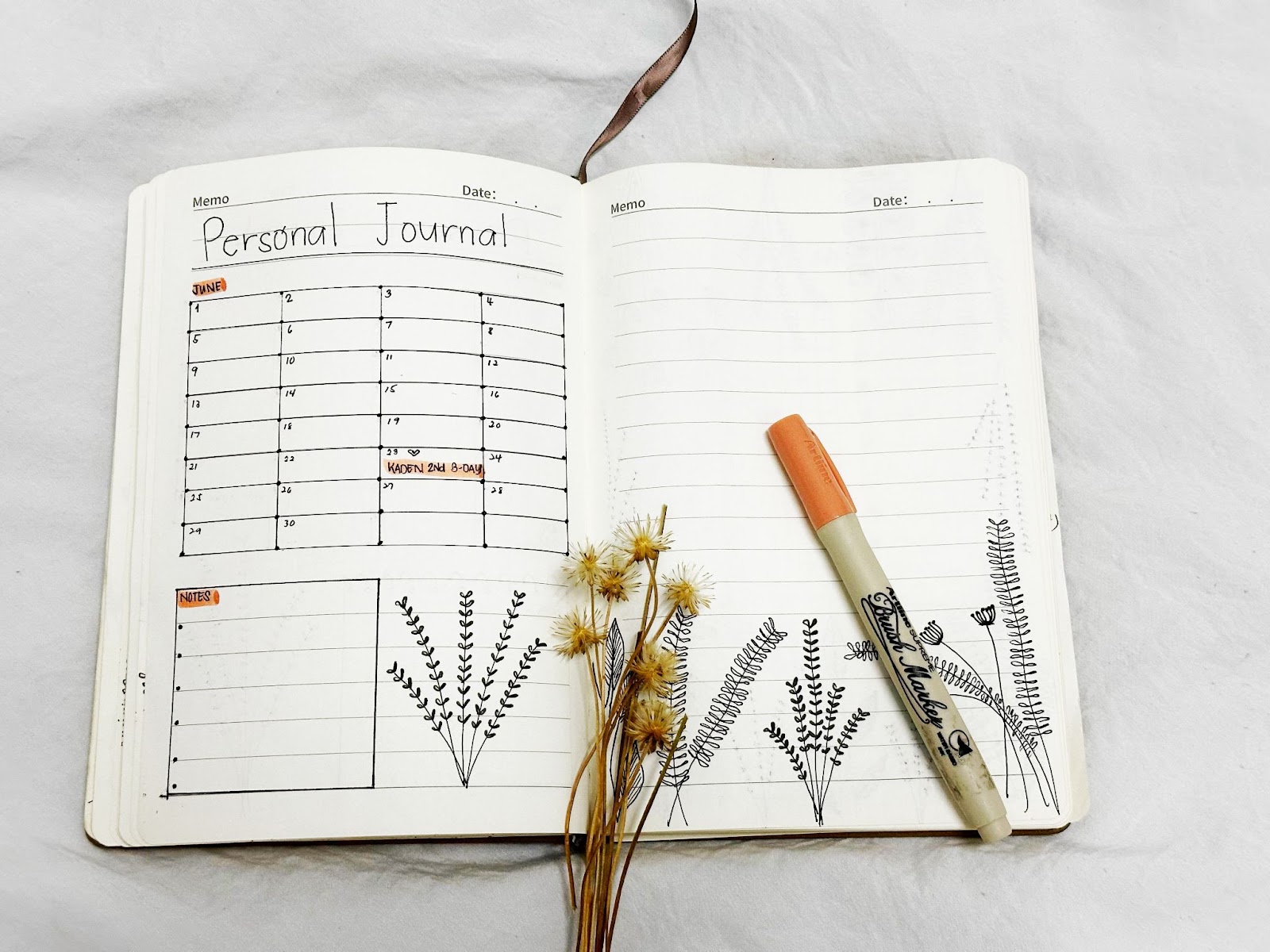
Fun fact: According to a study done by the National Library of Medicine, it showed writing, that is coupled with other expressive forms of discussing about an individual’s anxiety, can reduce and individual’s anxiety levels.
Anxiety needs an outlet, and writing can provide just that. Writing down your feelings can help you process emotions and reduce mental clutter.
Journaling doesn’t have to be structured. I like to sit down at night and write out how my day was: what I did, what I liked, etc. Sometimes, I write about what’s on my mind and memories that are on my mind.
For others who prefer more structure, prompts are a great way to generate thoughts transferable onto paper.
You can find journals with guided writing exercises to get your mind flowing. Journaling can help promote mindfulness and gratitude, which help manage anxiety in a healthy way.
Including color into your journal can motivate you to keep pushing forward as well. Stickers are essential for me.
If writing and art aren’t piquing your interest, yoga and meditation may serve as life-changing exercises for both your mind and body. I know a handful of my own close friends who swear this is one of their favorite engaging hobbies to help with anxiety. Keep on reading to find out how you can start!
RELATED ARTICLE: Identifying And Planning to Achieve Personal Goals: A Guide to Success
4. Yoga and Meditation
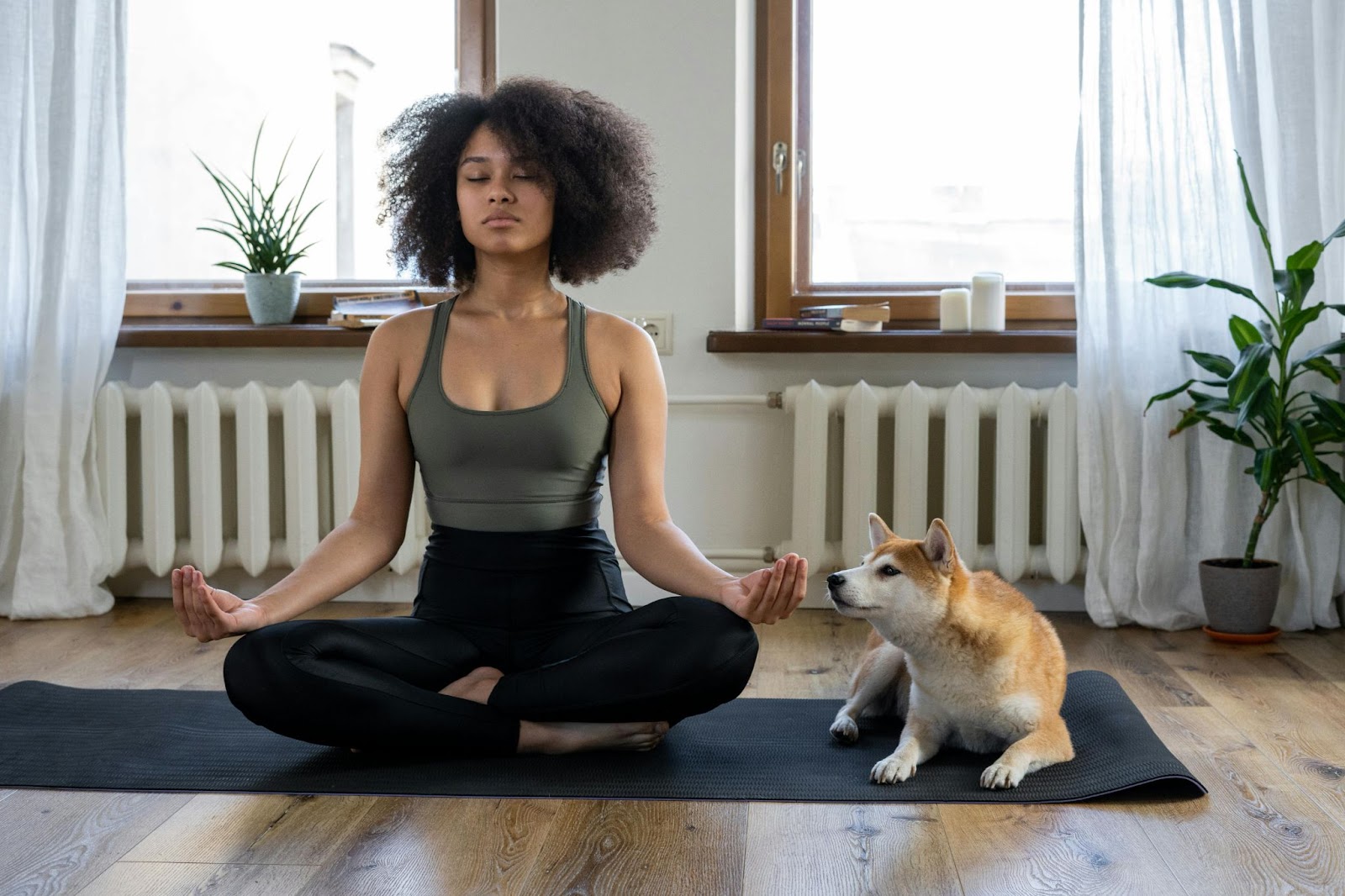
Fun fact: According to a study done by the National Library of Medicine conducted by Dr. Shannmugamurthy Lakshaman, a research scientist, yoga and meditation helps our brain to be stimulated with mental exercise. This regular type of exercise can be seen as preventative care for individual’s mental and physical health.
I grew up doing yoga and meditation, and it helps keep me grounded at an early age. Growing up and seeing my family do it increased my curiosity for it. I found out later in life that this practice was not only great for my own well-being, but it shaped the way I handled my daily life.
If you are new to this exercise, taking a moment to breathe and center yourself can help you get through the day. Yoga combines physical movement with mindfulness. Moving your body can help alleviate anxiety symptoms. You can also find easy yoga routines online.
Guided meditations can also help calm your mind. Focusing on breathing and your thoughts can help you process your emotions. Yoga and meditation encourage you to be aware of your anxiety, which you can then focus on managing tasks at hand.
Within the realm of my chidhood, another hobby that I took on that I found to also help ease my anxiety included reading. This is the one hobby that I’ve practiced the longest out of all my 15 engaging hobbies to help with anxiety.
Let me ease you into this activity in this next section.
RELATED ARTICLE: Unlocking Daily Happiness: 9 Easy Self-Care Practices for a More Joyful You
5. Reading
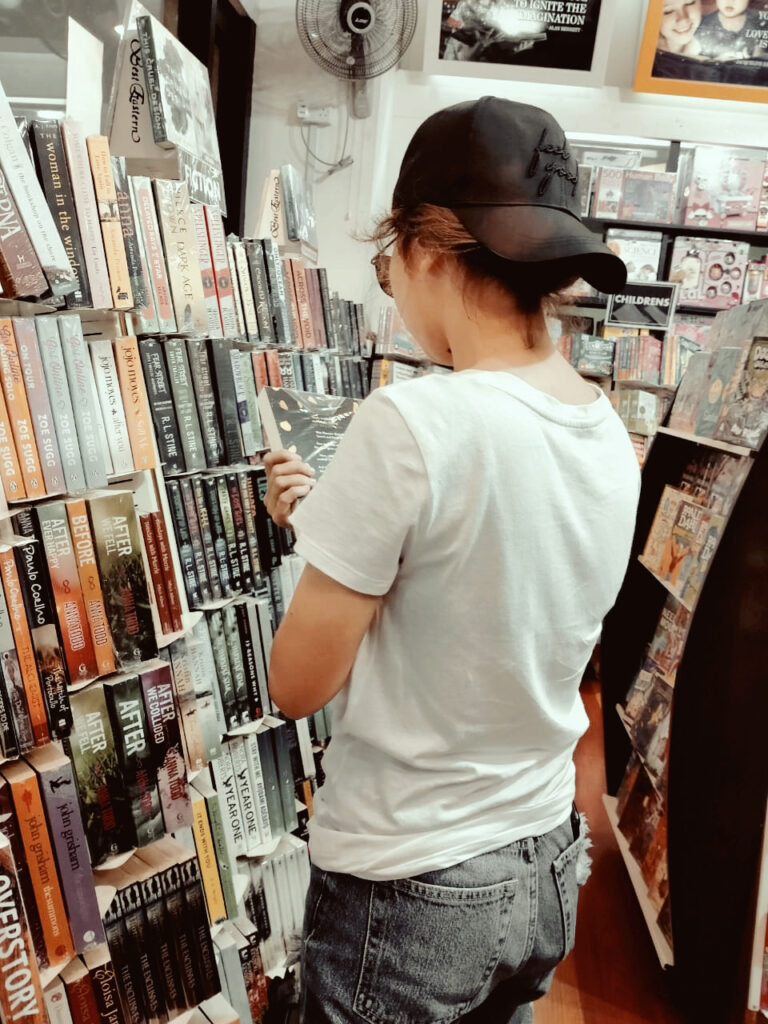
Fun fact: According to research conducted by Dr. David Lewis, reading 6 minutes a day can “reduce stress levels by 60% by reducing your heart rate, easing muscle tension and altering your state of mind.” By gentling coxing the cognitive section of your brain to read daily, this habit can reduce anxiety efficiently overtime.
For many of us, I love books for the same reasons I love binging movies: books can transport you to another world. The stories encapsulated in books draw me and help distract me from anxiety. Reading is great because it takes up my focus and provides an immersive experience without the need for physical labor or being out in the hot sun.
Many people are turned off by reading because they associate it with the books they were forced to read for English class. While those books definitely hold merit, I recommend finding books that you like.
My secret trick is to look online for forum that introduce new books that encapsulates your interest. Better yet, join a book club!
Whether it’s a good mystery novel, or a romance that pulls on your heartstrings, reading stories you find enjoyable can help you lower anxiety levels – even if it’s a simple 6 minute read a day.
If you love movies and the soundtrack but you’re not a fan of reading or subtitles, music might be your forte. Playing music is another great hobby to pick up for a leisure activity that can help with your anxiety. Let me fill you in about it’s wonders in this upcoming section.
6. Playing a Musical Instrument

Fun fact: According to an article from Harvard Medicine, music touches on specific areas of your brain: cognitive, emotional, and physical well-being. These triggers release dopamine which can boost your mood.
I would definitely consider myself an amateur musician. Playing an instrument is proven to have many benefits, including improving coordination and focus. I’ve played the piano since I was five and took up viola in school, so playing music is very nostalgic to me.
I love songwriting and bringing together different instruments to create something beautiful. Beginner friendly instruments, like the ukulele or piano could be a good place to start. There are plenty of online tutorials and free sheet music to help you get started.
Don’t feel overwhelmed if you’ve never played an instrument before. It’s never too late to start.
Playing an instrument can be a transformative experience. The physical and mental demands of learning an instrument helps ease anxiety symptoms. Remember that instruments are meant to be fun! Don’t put too much pressure on mastering your musical instrument but try to create something you are proud of.
While feeding our brain, we need to also consider feeding our bellies. That is why in this upcoming section, you’ll get to learn why cooking and baking are engaging hobbies to help with anxiety.
7. Cooking or Baking
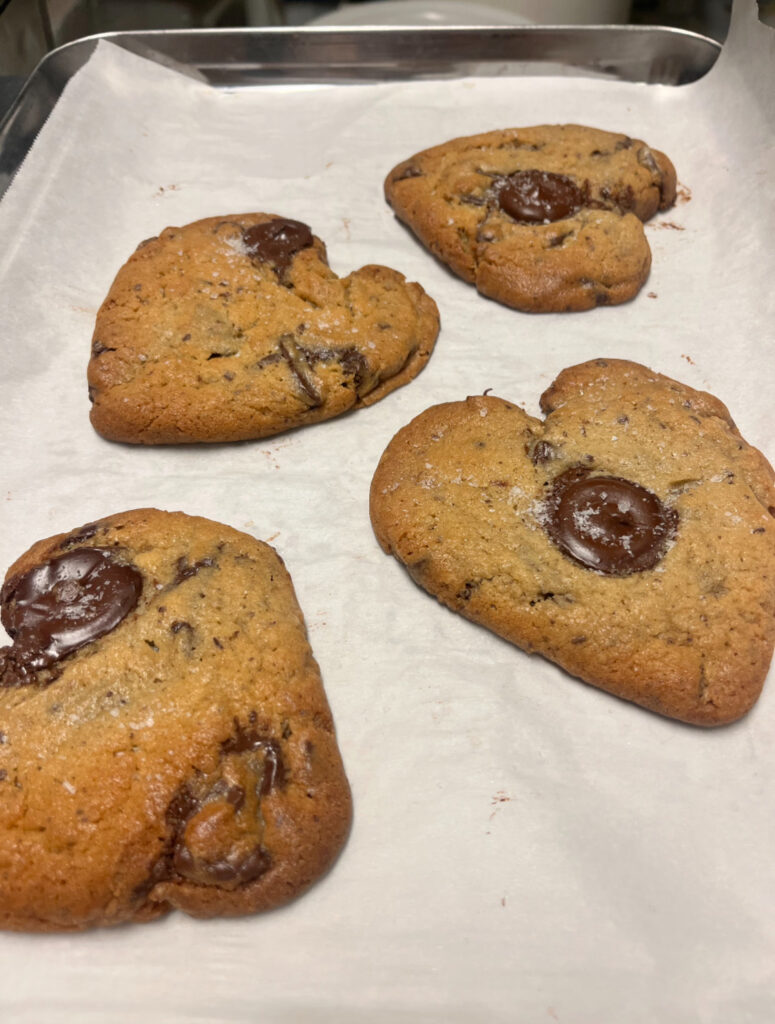
Fun fact: According to a study done by Northern Healthcare, cooking and baking are related to art therapy. Getting creative in the kitchen impacts cortisol levels, induces deeper sleep, and stimulates senses to decrease chances of being at risk for mental health like depression and anxiety.
The best part of this hobby is not just the treats that come out of it, although it is an undeniable perk! I have a sweet tooth, and I find myself baking in the kitchen more often than not. There is something therapeutic about creating treats from scratch.
It gets your body moving and you know that you will have tasty food in your hands soon. Start with something simple, like pasta or a mug cake. Knowing that you made something and it tastes great drives you to get creative more often.
If you have more time on your hands, try to make something that is more advanced, like a Wellington. Food is a great way to alleviate anxiety and making it can give a sense of accomplishment.
If you like being in touch with different smells and possibly even different scenes, consider hiking or taking leisure nature walks. In this next section, find out how they are one of most easy and low impact engaging hobbies to help with anxiety.
8. Hiking or Nature Walks
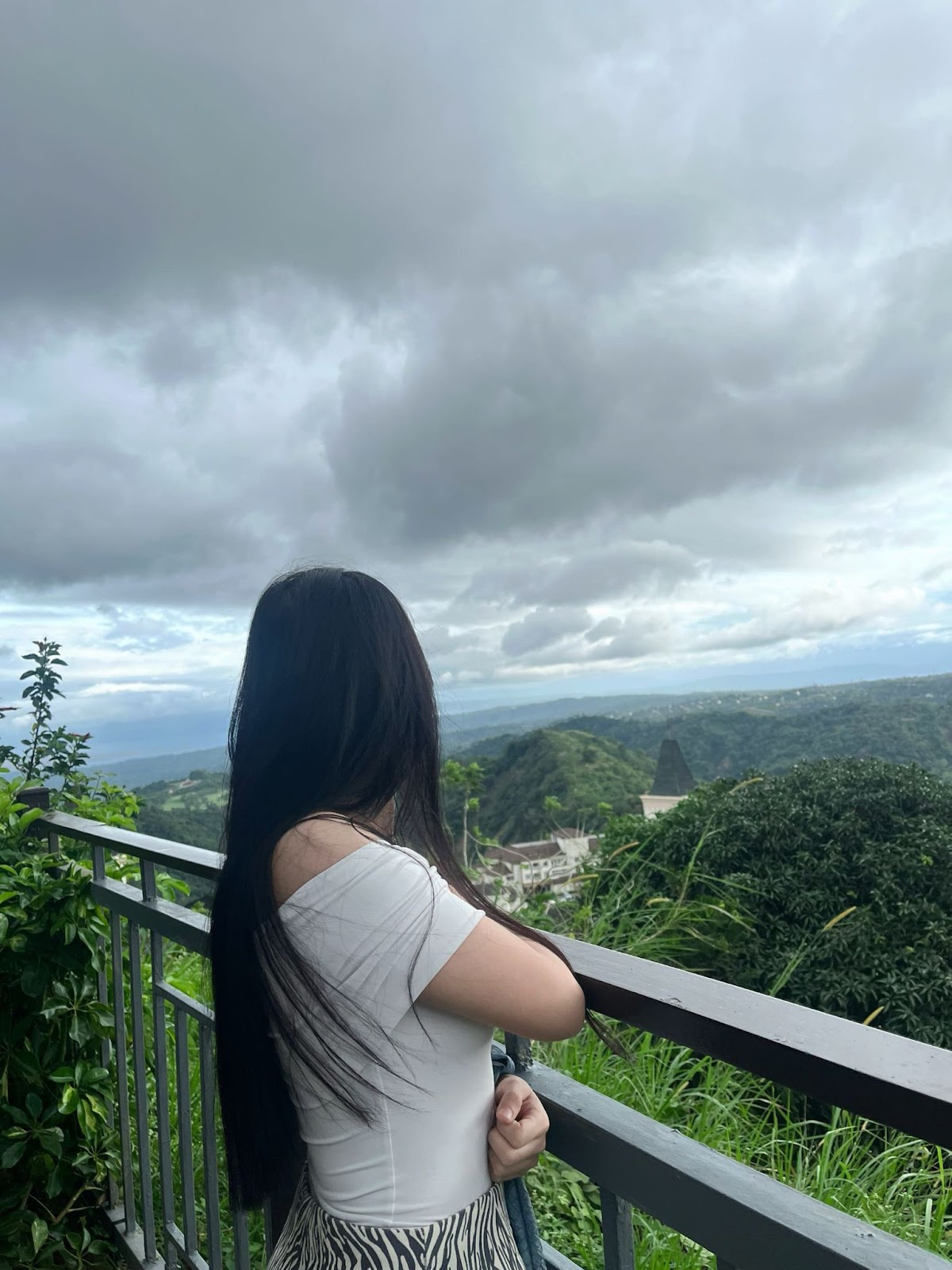
Fun fact: Studies from the American Heart Association shows that hiking a total of 120-minutes a week can improve not only your mobility, but enhances your brain stimuli as well – reducing anxiety.
For myself, going outdoors can be healing. I love getting out of the house, feeling the sun on my face and seeing the animals go about their day. It’s a perfect hobby to pick up for yourself, with family, your pets, or even your friends!
This is one of the many ways I like to discover fun finds in nature. By making a game out of what unique things I spot as I hike, it eases my mind and takes away my anxiety.
Spending time outside can help improve mood and reduce stress. The sun can provide Vitamin D, which can help decrease anxiety levels. If you are like me and not athletic, consider outdoor activities like bird watching or a picnic. Hiking and nature walks can also be fun.
Try getting out of the city and finding local trails to explore the beauty of your own backyard. Remember to stay safe and hydrated while hiking!
Let’s get onto another fun way of taking care of your mental well-being: knitting and crocheting. This may be a hobby your remember your mom or grandma doing most days, however, they do it for good reasons and let me tell you why in this next section.
9. Knitting or Crocheting
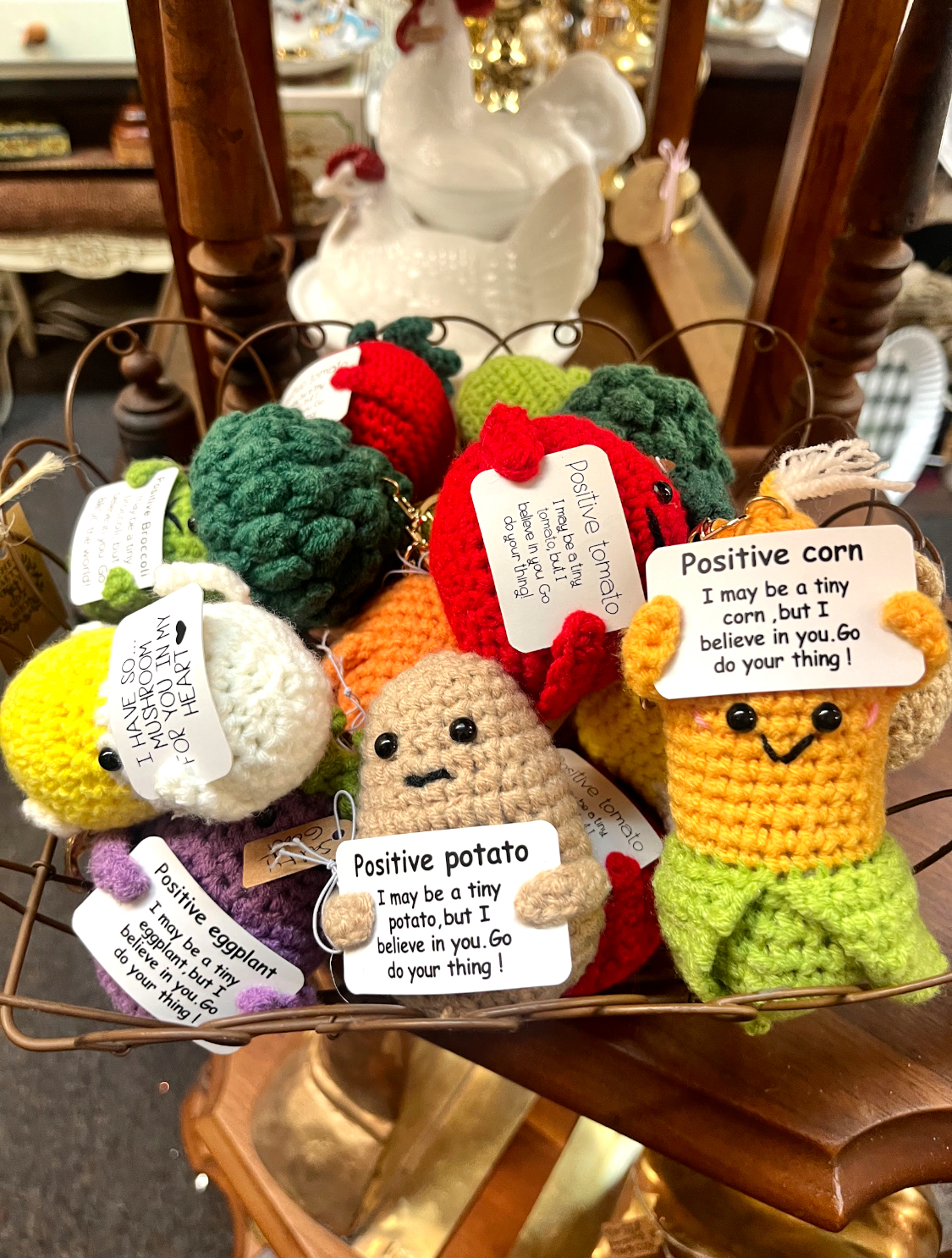
Fun fact: According to studies done by Anxiety Resource Center, the repetition of using knitting tools and crochet tools induces calm neural patterns to form. These patterns increase dopamine and decreases levels of high tension that your brain picks up.
One of the worst symptoms of anxiety is not being able to figure out the future. The calming, repetitive motion of knitting and crocheting helps calm my body down. It is a routine that keeps the fingers moving and helps calm the mind. Start with something simple, like a blanket or a scarf.
This is very similar to what kids nowadays call fidget toys. Once you start doing it, it becomes instinctual – like riding a bike.
There are plenty of videos online you can use, or you can buy starter kits and patterns. My sister loves to crochet, and she’s made many incredible things out of yarn.
You can work your way up to something more advanced, like a stuffed animal. Crocheted and knitted products make for wonderful gifts as well!
If you prefer to take a step back and ease into a hobby where you can also be a spectator, photography might be a calm and transformative hobby for you to pick up. Let me explain to you why that is in this next section of my 15 engaging hobbies to help with anxiety guide!
10. Photography
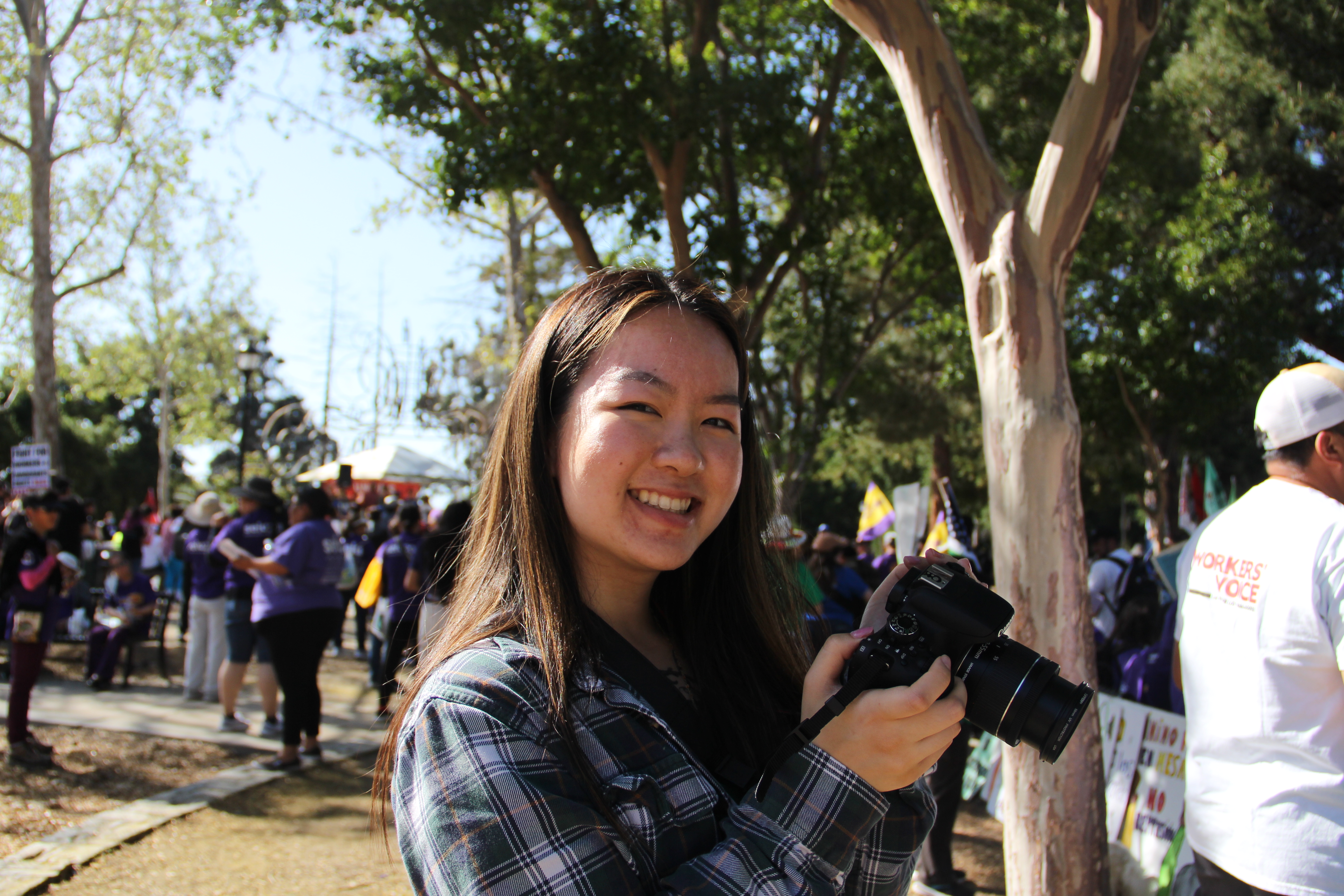
Fun fact: According to Acenda Integrated Health Organization, photo serves to capture moments in time through different lenses. Much like learning about people’s experiences and lives, having the ability to capture those moments take creativity and understanding – both skills which can be developed through unlocking the creative side of your brain.
I don’t think we appreciate photography enough. The ability to capture a moment of time forever is incredible. Don’t get intimidated if you are starting out in photography, focus on capturing the beauty around you. You don’t have to buy fancy equipment or anything like that.
I am partial to using my phone since it is so easy and convenient. I know a lot of my friends and family have invested in budget friendly cameras, and they swear by them. I have also been interested in polaroids; I love how you can print out the picture immediately, an instant memory.
My biggest recommendation is to also visit your local camera shop and purchase a cheap camera. It’s fun to learn and tinker around with the settings because each camera is unique.
Photography can help you live in the present and remember the happy times, especially when you are having anxiety flare ups. You can look through your happy memories to help keep you grounded.
Though photography focuses on capturing moments in stillness, moments in action is another great way to manage your anxiety. Dancing is one hobby that many people pick up once in their lives or through an elective they take in school. In this next section, let me dive into how dancing is one of the most amazing engaging hobbies to help with anxiety!
11. Dancing
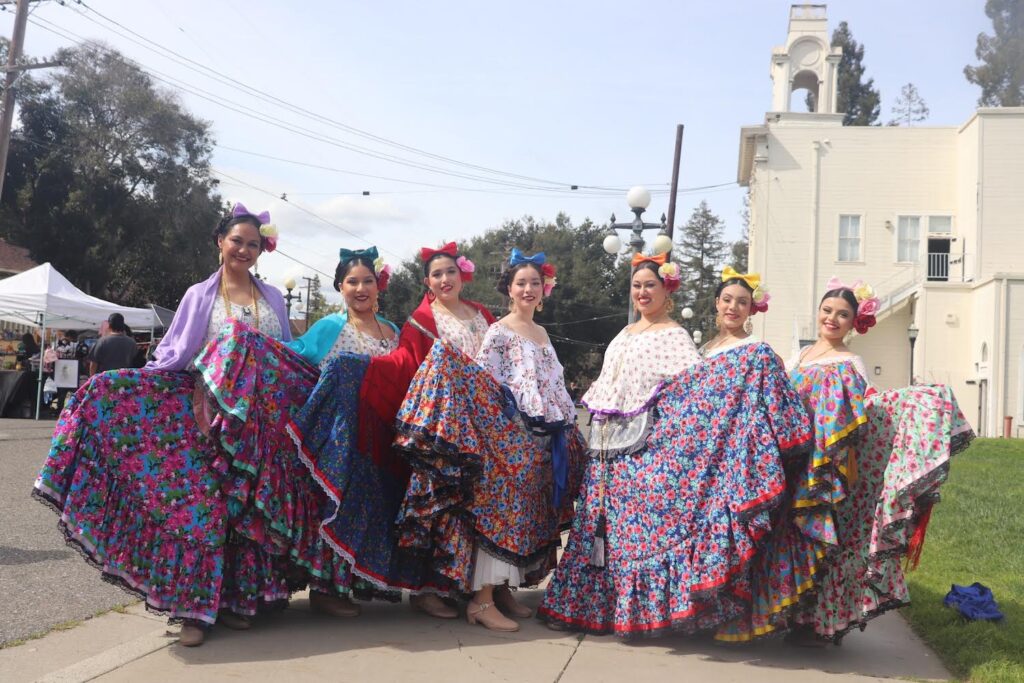
Fun fact: According to data from ISBA Foundation for scientific research, dancing is a prominent treatment for mental challenges, such as depression. Dancing is a psychophysiological activity that focuses on “regenerative functions” which fosters engagement, promotes awareness, and well-being.
I must admit, I am not the best dancer. In fact, I would say I’m a pretty terrible dancer. However, I love how fun dancing can be, and it’s a reminder that you don’t have to be good at something to enjoy it.
Dancing uses movement to release tension in your body and boosts endorphins to help you feel less stressed. You can try different types of dancing: hip-hop, swing, ballroom dancing, or even ballet! Dance classes are a great way to bond with friends and make new friends.
Many community centers and local dance studios offer introductory dance classes you can enroll in. You can also take dance classes online or look up dance routines to follow along to for a less structured experience.
If you like the aspect of thinking and engaging with others in dancing, but you’re not a fan of taking up too much space and loud sounds like dancing would – considering puzzles and brain games. These games are the types of engaging hobbies to help with anxiety that anyone of any age can take up. Let me get to why that is.
12. Puzzles and Brain Games
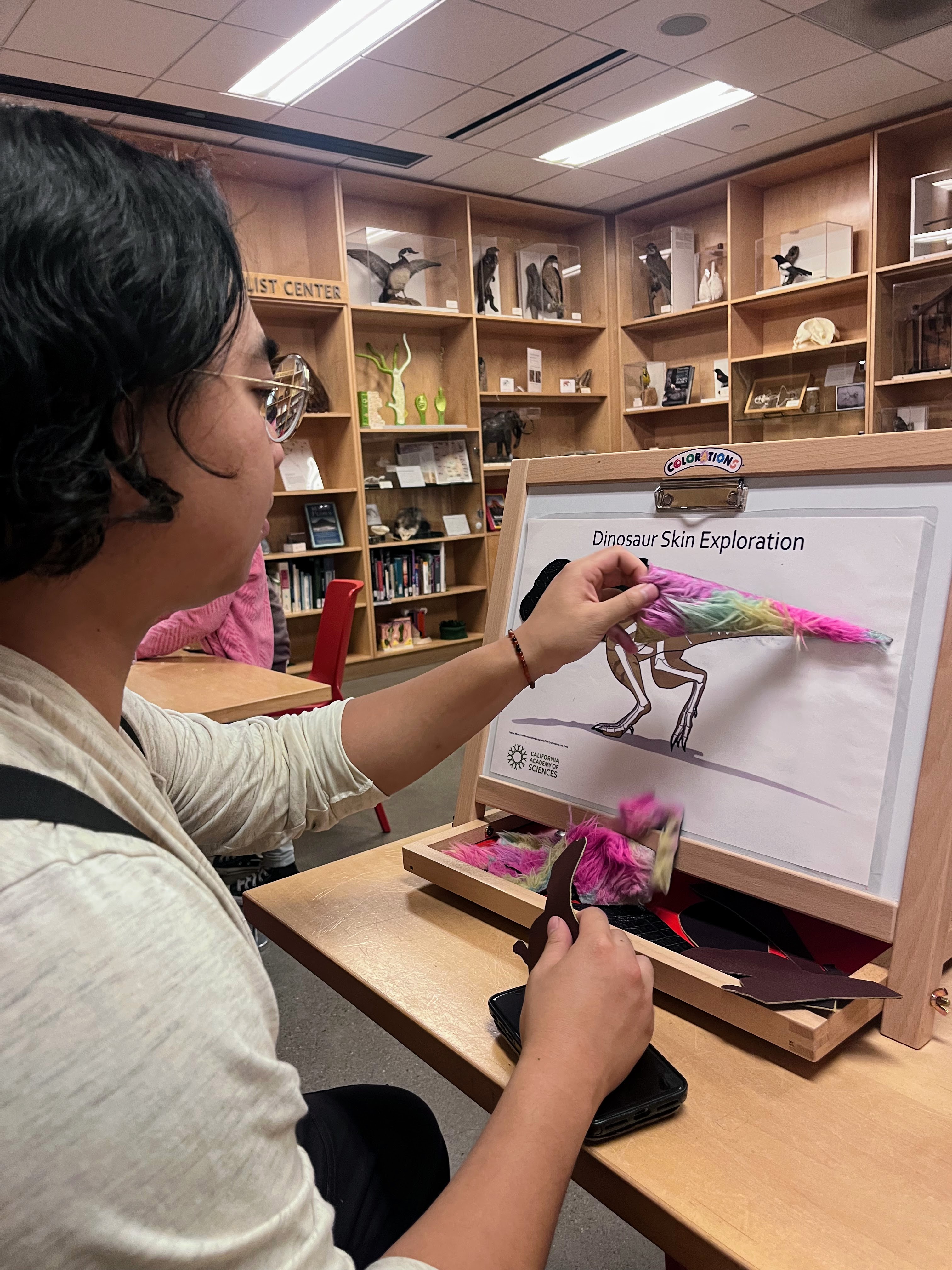
Fun fact: According to a study from the National Library of Medicine, puzzle games increase memorization, critical thinking and creativity. These assessment help brains development neuropathological pathways that stimulates cognitive abilities. With regular practice, it increases levels of dopamine and attributes to reduction in brain fog.
This one’s for all you brainiacs out there! One of my favorites out of my 15 engaging hobbies to help with anxiety has to be this one. Puzzles and brain games are great for taking up mental focus, pushing away feelings of anxiety. I know how anxiety can make it feel like everything’s falling apart. Putting together puzzles or working on brain games can give you a sense of accomplishment.
These activities promote focus and problem-solving skills, which in turn help regulate emotions. They take up a lot of brain power, which helps you distract yourself from feelings of anxiety. There are plenty of puzzles for you to choose from.
I like to be hands-on which is why I have a small section of my bookshelf that’s dedicated to jigsaw puzzles and mystery solving games. They can look on coffee tables or even as decor when you’re not playing with them.
I love words, so crosswords and riddles can keep me occupied for hours. If you are more of a math person, Sudokus could be a good fit for you. Artsy people tend to love jigsaw puzzles. You can access puzzles online or through apps, or consider investing in a puzzle book. Start off with an easier level and work your way up to more difficult ones.
If you’re looking to spend more quality time with others in a relaxed setting, volunteering can be a great alternative to puzzles. It’s one of the few engaging hobbies to help with anxiety that not only helps you feel better but also makes a positive impact on others. Keep reading to learn how you can get started!
13. Volunteering

Fun fact: According to a study from the Mayo Health Clinic System, volunteering serves to not only improve physical and mental health, but “provide a sense of purpose, teach valuable skills, and nurture new and existing relationships.”
Volunteering is a great way to give back to your community while helping you alleviate anxiety symptoms. Volunteering can give you routine, helping break you out of your shell. Working towards a purpose can give you a sense of accomplishment, and it is so satisfying to build connections through service.
Find an opportunity that you connect to. I volunteered at my local library all throughout high school, helping plan teen programs and creating book displays.
I loved how I was able to engage with the community while being surrounded by books, an environment I idolized. I now volunteer around my community, helping elementary school students with their homework. Seeing them grow is an incredible experience.
Volunteer work can look like a lot of different things. Find something you are passionate about to volunteer in; it is a great way to meet like-minded people! If you have a skill you are interested in teaching, consider hosting free classes at your local community center.
Community centers also often look for volunteers to help facilitate events. You can also look into volunteering with a soup kitchen, animal shelter, hospital, senior center, or religious center. You can also look into virtual opportunities, such as advocacy efforts.
If you’re like me and still like to go out to feel the sun, but prefer to not socialize too much, there is also another tempting hobby to pick-up: fishing! Though many people may not regard this as a part of their top 15 engaging hobbies to help with anxiety, I do. Let me explain to you why.
14. Fishing
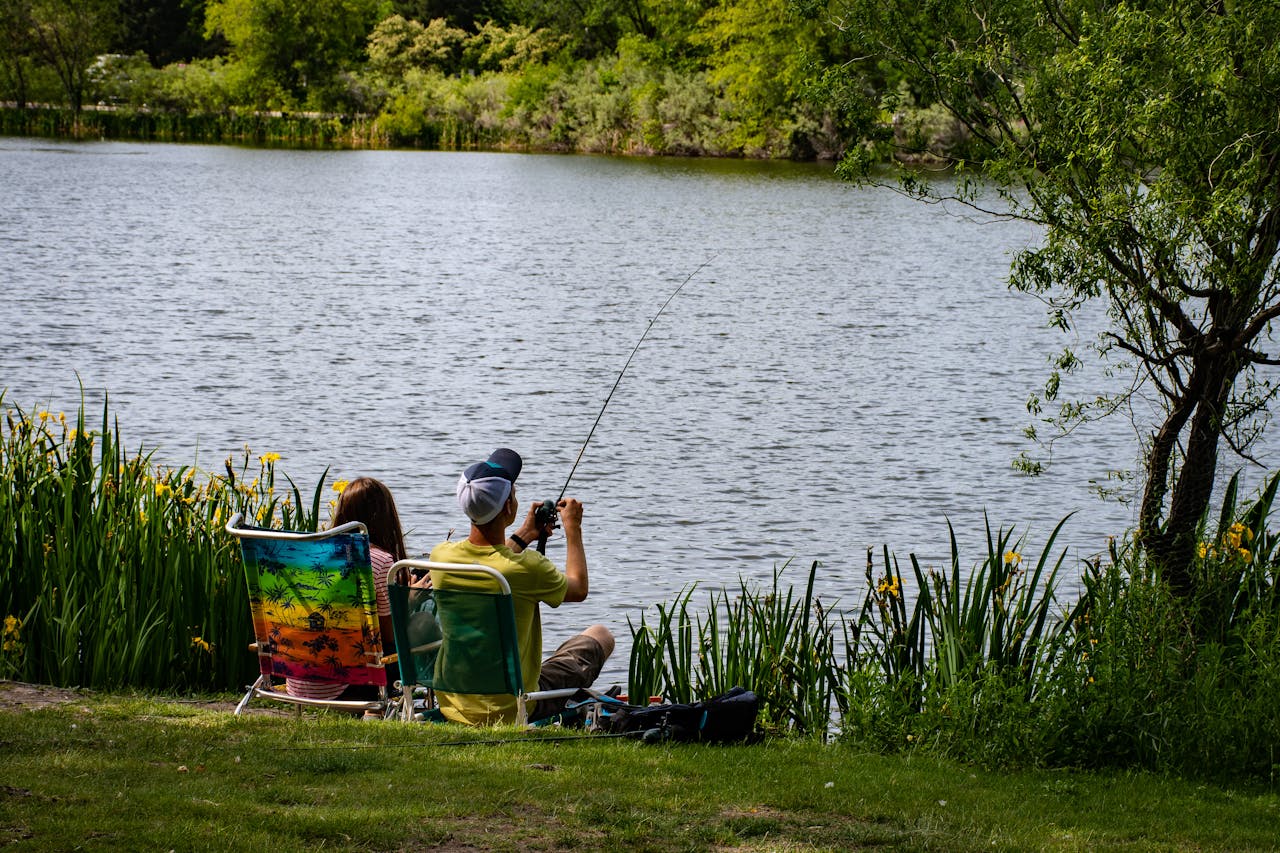
Fun fact: According to a study from the National Alliance on Mental Illness, fishing can be an emotional recharging hobby. With patience and tranquil space surrounding you, building confidence to soak in nature is a buildable feat when picking up this hobby.
Fishing is a hobby that goes back generations. It has been used to foster bonds for generations. If you connect with nature, this hobby is for you. Picture the stillness of the water as you float further in, waiting for your line to catch. Fishing is a hobby that is known for bonding generations together.
Spend some time with a loved one, or enjoy the calming solidarity that fishing can bring. You can choose to release the fish you catch or cook them (remember to follow food safety rules)! There are usually bait stores near popular fishing spots, or you can go to your local sports retailer to get fishing poles, nets and of course, bait.
Look into ethical fishing methods as you shop! Try a more “touristy” fishing spot if you are a beginner. These places usually have boats and equipment for you to rent, and they are filled with fish. As you get more advanced, you can check out some more local spots. Make sure these spots permit fishing before you go!
If you like the stillness that comes from observing, you may find joy in observing the small things in life – like through learning a new language! Let me explain why this is beneficial and part of the list of engaging hobbies to help with anxiety in this last section!
15. Learning a New Language
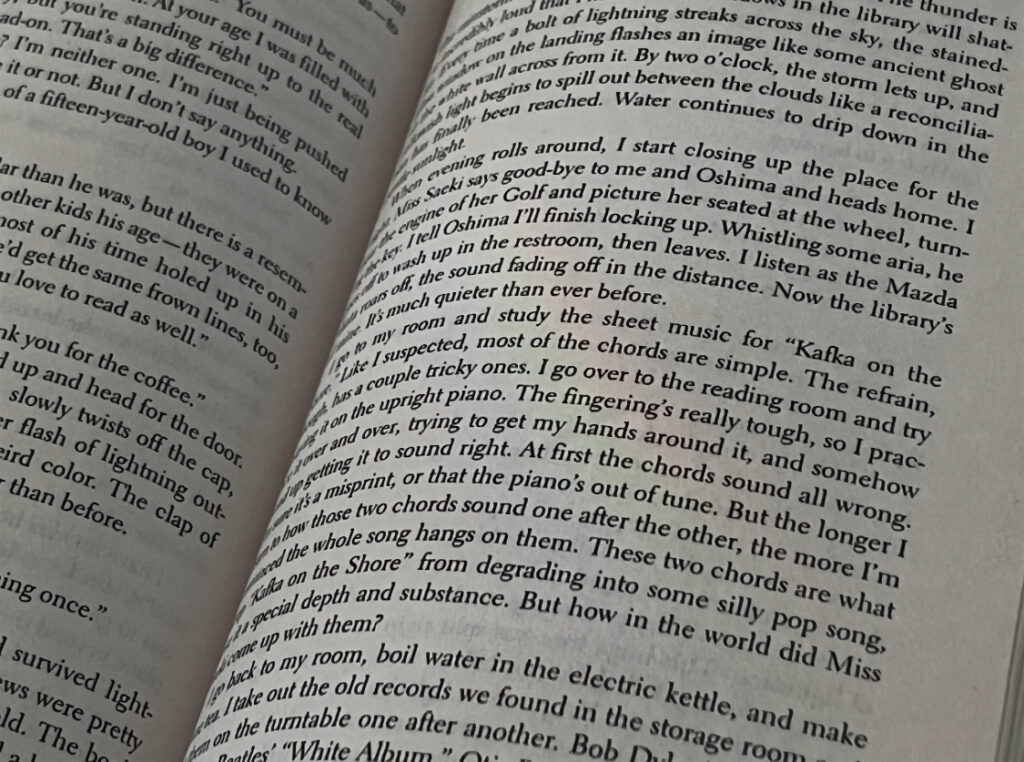
Fun fact: According to research from thiscalmer.com, learning two languaages or more can help with decreasing chances of dementia and helps an individual develop empathy. The way words are put together and the way sentences are structured alter a mechanic in the brain to help keep us retain memories.
Learning a new language can be very rewarding. I think languages are one of the most fascinating things about humans. We are able to create and learn new languages to communicate with each other. Learning languages can dispel barriers, helping you connect with people you may not have been able to before.
Start with languages you feel a connection to. If you consume a lot of Korean or French media, try learning those languages. If you love Italian or Japanese food, you can learn about their culture through language. Another good place to start are languages close to English.
I took Spanish all throughout high school, and I was able to pick it up easily because of how similar some of the words were to English. Immersion is an amazing way to learn a language. Many of my friends learned languages while studying abroad.
I would recommend talking to people in the language you are learning, watching media in those languages (with subtitles), and reading books/journaling in the language. Consider enrolling in language classes! Local libraries often offer them depending on the demand and the availability of teachers.
You can also check community colleges. There are also apps, like the iconic Duolingo, that you can use. As you explore these different channels, you might feel your anxiety levels going down.
I love how this hobby can look like many different things. It allows you to switch things up, rather than repeating the same action over and over again. It’s a different type of relaxation that is great for people who enjoy more excitement.
Now that we are at the end of our list, I’m sure you may be wondering “I want to have hobbies, but I don’t have the time for them.”
Like many people say, it’s not about finding the time – it’s about making the time. I’ll be explaining how you can part-take in these engaging hobbies to help with anxiety in the next section.
How to Make Time for Your Hobbies
I often forget about my hobbies because of my busy schedule. I get tired by the end of a long day, and the last thing I want to do is add another task to my list. Also, when I have other things I “should” be doing, I have trouble putting that aside to focus on a hobby.
My advice: Prioritize your hobbies. It may seem simple, but it is life-changing. Your hobby should be placed on the same pedestal you place your job and your chores.
When you get to the mindset that your hobbies are worth spending time on, you feel less guilty about taking the time to do them. Build your hobbies into your schedule. Find a balance between your hobbies and other work.
Remember that your hobbies are supposed to be relaxing. Some people work better with goals while others find goals stressful.
Know yourself, and learn about yourself. The reason why hobbies help anxiety is because it gives you time for yourself. Learn about what you like and dislike.
Make sure your hobbies are something that you look forward to. If you need to take a break, do so. If you need to take more time to engage in your hobbies, do so. If you want to try a new hobby, do so. The point is, hobbies don’t have to be structured. They are for yourself and only yourself, so you control what they look like.
Create a calming environment as you start your hobbies. If you’re at home, play some music, light a candle, and change into comfy clothes to help you wind down. Tell yourself that nothing else matters in the moment and focus on the present.
As you get into your hobby, consider practicing other self-care habits. Working out, healthy eating, and spa days are great ways to get your body to relax.
It’s easy for me to write this out, but I know how hard this is to do in real life. Remember that it takes time so don’t feel overwhelmed. You’ll teach yourself to relax the more you do these things.
The Long-Term Benefits of Hobbies for Anxiety
Hobbies are personal. They become a part of you. Many of my hobbies are things I’ve grown up doing. They’ve shaped parts of my life. I remember in high school, I had a lot of anxiety about getting into colleges and keeping up my GPA. Reading was one of the ways I helped alleviate my anxiety.
To this day, I feel a sense of nostalgia when reading. It improves my mental health because I know that I was able to overcome the difficulties. Reading also helped me make social connections. In college, I joined a book club, which helped me make more friends.
Try finding a community that shares your hobbies and interests. Connecting with people is one of the best ways to help anxiety, as you get people to talk your emotions out with.
FAQs
- Are there hobbies specifically for people with severe anxiety?
- Depending on what kind of anxiety you are dealing with, there are some hobbies that are known to lower levels of anxiety. Exercise and yoga can help pump endorphins into your body, which helps curb anxiety. I found meditation to be hard at first since I would be too in my head to enjoy the experience. However, the more you do it, the more you learn to control your emotions. Creative outlets are also proven to help. Anxiety gets worse when you bottle it up inside. Some people like journaling because it allows you to get your thoughts out of your system. Other people feel that writing down these thoughts makes it seem real. I love writing poetry because I can let out my emotions in a more symbolic way. You can also try painting, pottery, or really anything that inspires you.
- How do I stay consistent with my hobby when I feel unmotivated?
- It is okay to take some days off from doing your hobby. Give yourself some grace. However, if you consistently feel unmotivated, schedule some time to work on your hobby. Try a new place, start a new project, do something that gets you excited. Remember that you don’t have to stick to one hobby. Start a new hobby if it gets you more motivated and circle back to whatever you’ve been working on when you feel more motivated.
- Can trying too many hobbies at once increase anxiety?
- It is good to have multiple hobbies, but if they are stressing you out, it can increase your anxiety levels. Make sure your hobbies are low-stakes enough that it is okay if you are not perfectly consistent with them. Also, don’t let your hobbies get in the way of your everyday life. Finding a balance is key!
Final Thoughts
Anxiety doesn’t go away overnight. As you get into your hobbies, you will feel yourself getting lost in your hobbies. I know how hard it is to keep up with your hobbies, but remember that it is worth taking care of yourself.
Hobbies aren’t about adding to your list of accomplishments. They help you find out who you are. Try out different hobbies until you find out what works for you.
Through reading these 15 engaging hobbies to help with anxiety, I do hope that you try a couple of them out or recommend them to someone you know. Any effort contributes to a big success over time – I know it did for me.
Share your experiences with hobbies in the comments! Tell us what you do to help alleviate your anxiety.
You’ll Also Love: 100 Powerful Affirmations To Manifest Your Best Year Yet in 2025


Plugin designed by RofiTech

Leave a Reply